



Why SEO Is Important
Your best customers are searching for what you sell right now. The only question is whether they land on your page or a competitor’s.
That is the plain answer to why SEO is important. Search engine optimization decides whether the people already looking for your product, service, or answer find you in the unpaid results, or scroll past you to someone who did the work.
Plenty of business owners hear that SEO matters but never get a straight explanation of why, in terms concrete enough to act on. This post gives you the real business case, why AI search raises the stakes instead of ending them, and the first moves that actually shift your rankings.
What SEO actually is
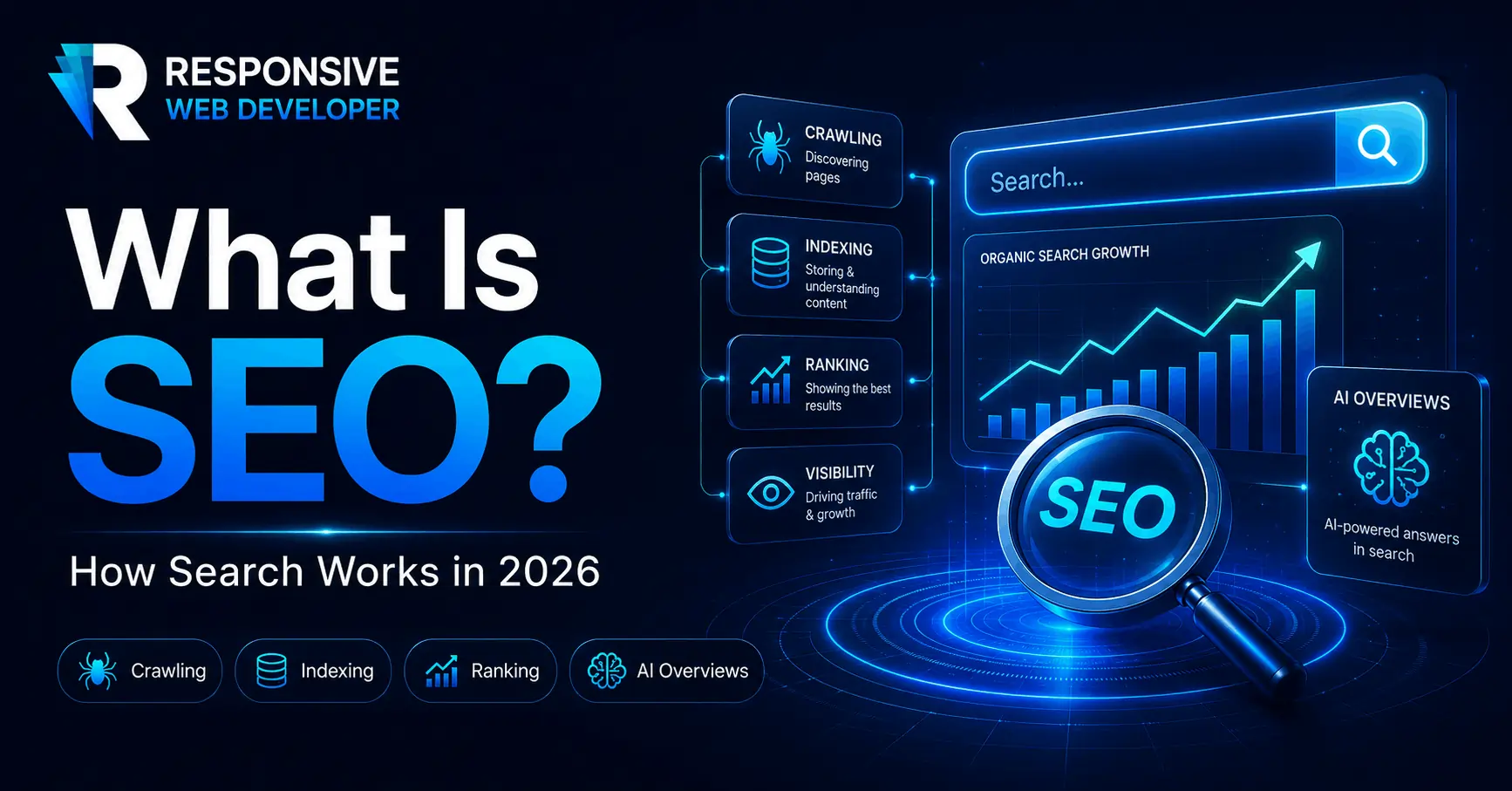
SEO stands for search engine optimization: improving your website so it appears higher in the unpaid search results when someone looks up a term related to your business.
Most of the work falls into three buckets:
- On-page SEO: the content, titles, headings, and internal links on each page, matched to what searchers actually want.
- Technical SEO: the foundation that lets search engines crawl, index, and load your pages fast, including mobile usability and site speed.
- Off-page SEO: the authority you earn from quality backlinks, reviews, and mentions on reputable sites.
Get those three right and you show up when it counts. Everything else is detail.
SEO reaches people at the moment they want to buy
Search is intent made visible. Someone typing “best running shoes for flat feet” or “emergency plumber near me” is telling you exactly what they need, and roughly when they need it.
Contrast that with a social ad that interrupts someone halfway through a vacation photo and hopes to borrow three seconds of attention. SEO works the other way around. It meets demand that already exists instead of trying to manufacture it.
That is why search traffic tends to convert well. The visitor came looking for you, not the reverse.
Organic traffic is an asset, not a monthly bill
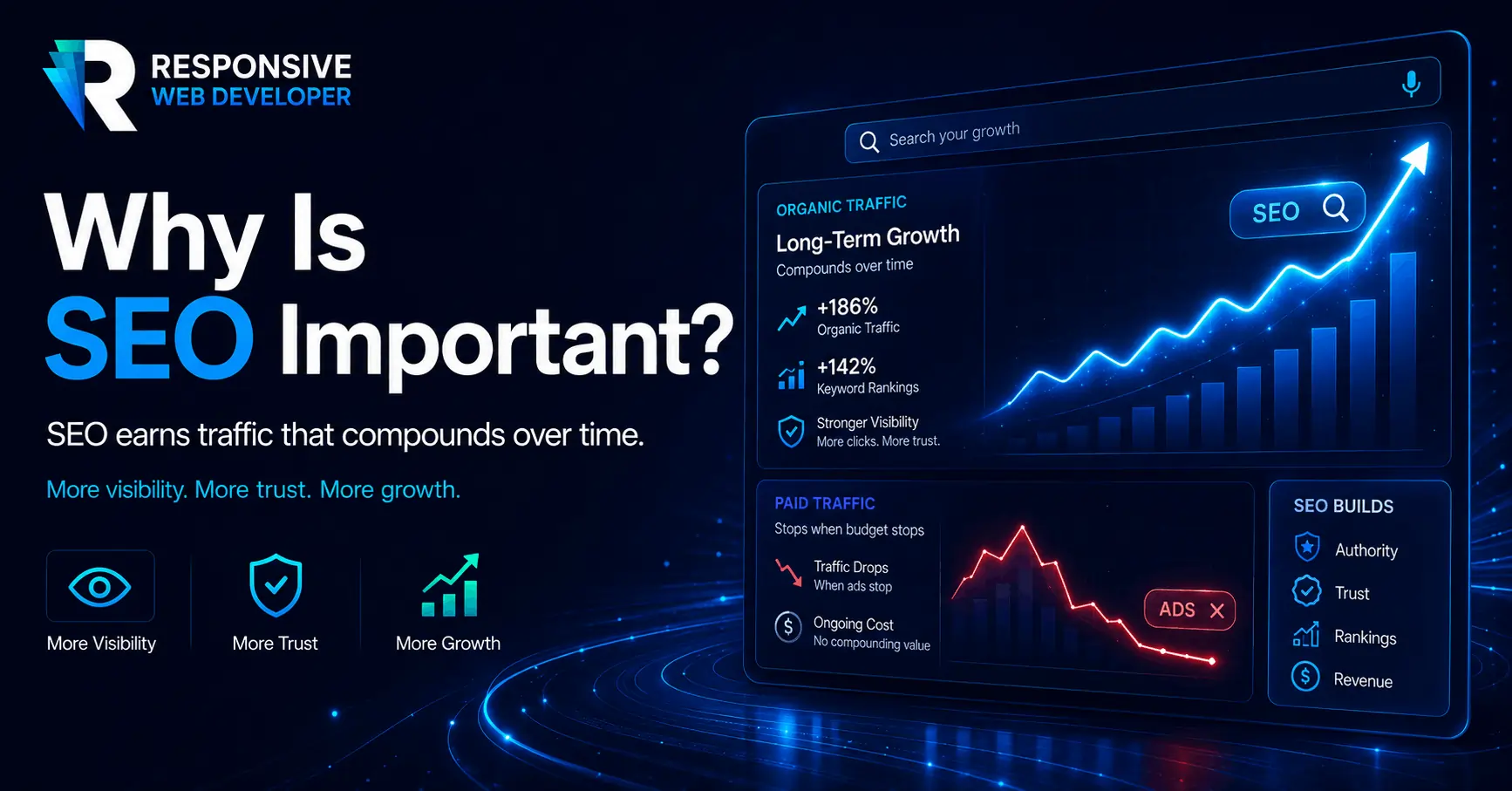
Paid ads have one uncomfortable property. The traffic stops the moment you stop paying. Kill the budget on Friday and the visitors are gone by Friday afternoon.
A page that ranks behaves differently. Write one genuinely useful article, earn the position, and it can keep pulling in visitors for months or years at no cost per click. You built something you own instead of something you rent.
Over a long enough window, that changes the math. A single strong page can quietly outwork a large ad budget, because its cost was mostly upfront and its returns compound.
To be clear, ads and SEO are not enemies. Ads buy speed. SEO builds equity. Most businesses need both, but only one of them keeps working while you sleep.
Ranking builds trust before you say a word
People trust the top organic results in a way they never trust ads. Reaching page one signals that Google considers you a credible answer, and users absorb that signal whether they notice it or not.
The click data backs this up. Most searchers never reach page two, and the top handful of results take the majority of clicks.
So visibility and credibility arrive together. By the time a prospect reaches your site from a strong ranking, you have already cleared a trust bar that a cold ad still has to fight for.
SEO is how you show up in AI answers now
Here is the shift that makes SEO more important in 2026, not less. AI Overviews in Google, along with tools like ChatGPT, Gemini, and Perplexity, increasingly answer questions by pulling from and citing web content.
Consider what they pull from. Clear, authoritative, well-structured pages backed by credible links: the same qualities that earn traditional rankings. The signals that make you rank are largely the signals that get you quoted.
People call this generative engine optimization, but it is less a separate discipline than SEO applied to a new surface. If your content is the best answer on the open web, you become a strong candidate to be the answer an AI hands its user.
The takeaway is simple. AI search is not replacing SEO. It is raising the reward for doing SEO well and shrinking the payoff for doing it cheaply.
For small and local businesses, SEO is the map
This is where a small operation can beat a national chain outright, which is a big part of why SEO is important for small business specifically. “Near me” searches carry heavy purchase intent, and they are often decided by geography and relevance rather than by whoever has the biggest budget.
A single-location bakery that optimizes its Google Business Profile, collects real reviews, and builds a page for “custom birthday cakes in [city]” can own that search in its town. The chain three states away is not even competing for that intent.
If you serve a specific area, claiming and polishing your Google Business Profile is close to the highest-leverage thing you can do. It costs nothing, and it puts you on the map, literally, in the local pack and on Maps.
SEO makes every other channel work harder
The research behind SEO, the actual phrases your customers type, is intelligence you can use everywhere.
Those keywords tell you what to write in your newsletter, what to answer in your social posts, and which objections to handle on your sales pages. The landing pages you build to rank also lift the conversion rate of your paid ads, because a better page converts traffic from any source.
This is why SEO is important in digital marketing beyond traffic alone. Done well, it feeds the whole marketing stack and makes the rest of your spend more efficient.
“But isn’t SEO dead?”
Every few years, someone declares SEO dead. Social media was going to kill it, then voice search, now AI. It keeps not happening, and the reason is worth understanding.
Tactics change constantly. The underlying goal does not: help a searcher find the best possible answer. Pages that chase that goal by stuffing keywords into thin, generic content have always lost eventually, and AI search punishes them faster than anything before it.
What wins is what has always won, held to a higher standard. Genuinely useful content, a fast and crawlable site, and real authority. SEO is not dead. Low-effort SEO is dying, which is good news if you are willing to do the real thing.
How to start: first moves that matter
You do not need a big budget to begin. You need to do a few things well.
- Claim and optimize your Google Business Profile if you serve a local area. Fill in every field, add photos, and ask happy customers for reviews.
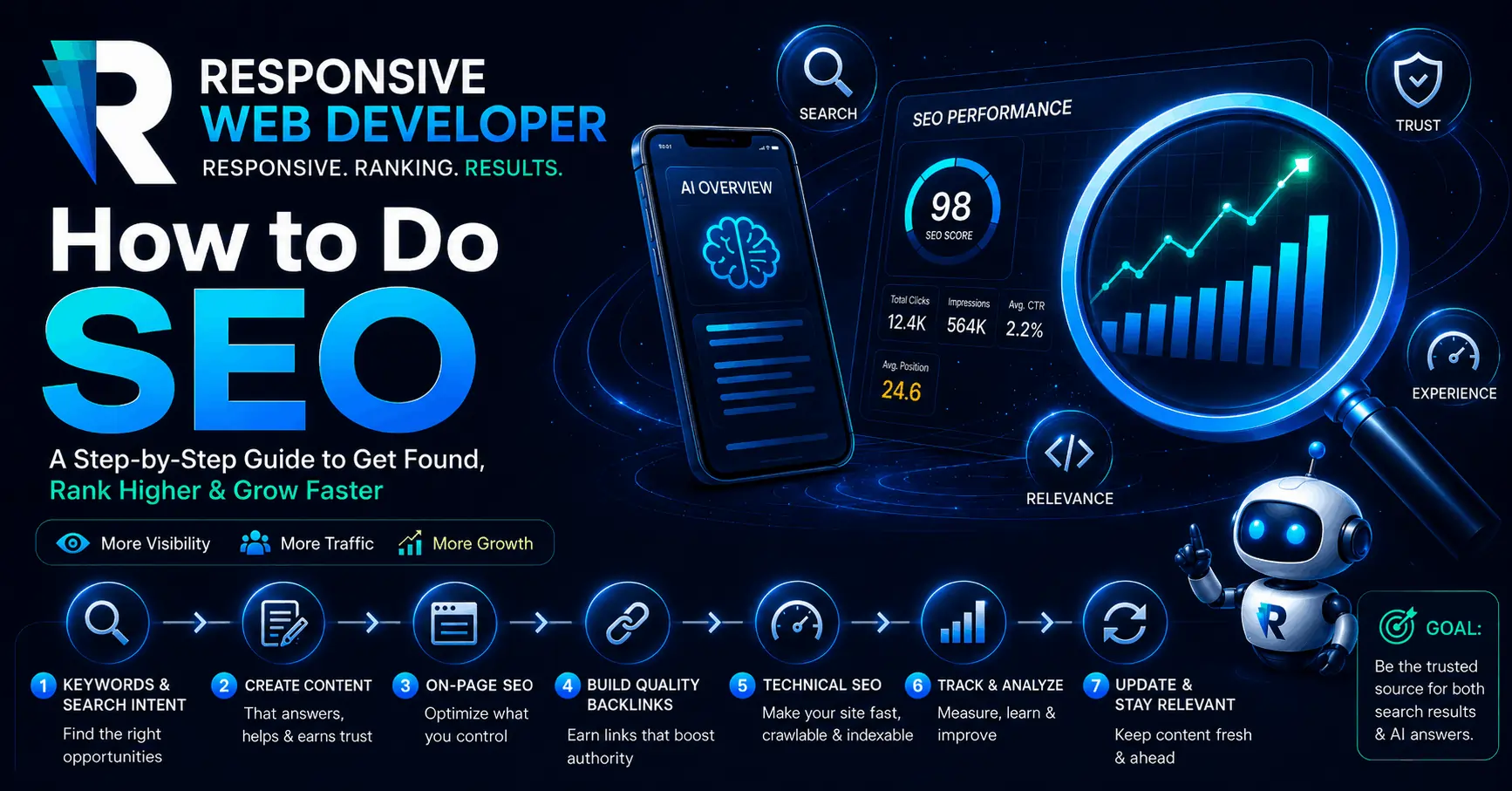
- Find the questions your customers actually search. Even free keyword tools reveal the phrasing real people use, which is usually different from how you describe your own product.
- Write one genuinely useful page per key question, and match the intent behind the search. A “how to” query wants a guide, not a sales pitch.
- Fix the technical basics. Make sure your site loads fast and works cleanly on mobile, where most searches now happen.
- Earn a few quality backlinks. Local press, partner sites, and being genuinely worth linking to beat any shortcut.
- Track and improve with Google Search Console. See what you already rank for, then sharpen the pages that are close to breaking through.
The bottom line
SEO is important because it captures demand that already exists, compounds into an asset you own instead of a bill you pay, builds trust before the first conversation, and now feeds the AI answers your customers increasingly rely on. It is not the fastest win available. It is the most durable one.
So do one thing today. Pick a single question your customers actually ask, and make your page the best answer to it on the entire internet. That one move is where ranking, traffic, and trust all begin.
Frequently Asked Questions About Why Is SEO Important
What are the 3 C’s of SEO?
The 3 C’s of SEO are Content, Code, and Credibility. Content helps answer what your audience is searching for. Code makes your website easy for search engines to crawl, understand, and load. Credibility comes from trust signals like backlinks, reviews, expertise, and brand authority. Strong SEO needs all three working together.
What are the 4 pillars of SEO?
The 4 pillars of SEO are Technical SEO, On-Page SEO, Content, and Off-Page SEO. Technical SEO helps search engines access your site. On-page SEO helps them understand each page. Content gives users useful answers. Off-page SEO builds authority through links, mentions, reviews, and reputation. Together, these pillars help a website rank, earn trust, and attract organic traffic.
What’s replacing SEO?
SEO is not being replaced, but it is changing. AI search, AI Overviews, and generative engines are changing how people find answers online. However, those AI systems still rely on discoverable, trustworthy, well-structured web content. That means SEO now includes optimizing for both traditional search engines and AI-powered answers.
What is the golden rule of SEO?
The golden rule of SEO is to create content for people first, not search engines first. Keywords matter, but they should support the reader’s experience rather than interrupt it. The best SEO content answers real questions clearly, provides useful information, and makes the next step easy for the reader.
What are the top 5 SEO strategies?
The top 5 SEO strategies are keyword research, high-quality content, on-page optimization, technical SEO, and authority building. Keyword research shows what people search for. Content answers those searches. On-page SEO improves relevance. Technical SEO improves crawlability and performance. Authority building helps search engines trust your site.
Which is better, SEO or SEM?
Neither SEO nor SEM is always better. SEO is better for long-term organic growth, lower cost per visitor over time, and building trust. SEM is better for fast visibility, product launches, and immediate lead generation. Many businesses use SEM for short-term traffic while building SEO for long-term results.
How complicated is SEO?
SEO can feel complicated at first because it includes content, technical website health, keywords, links, user experience, and analytics. But the basic idea is simple: help search engines understand your site and help users find the best answer. You do not need to master everything at once. Start with useful content, a crawlable website, and consistent improvement.
What are SEO rules?
The most important SEO rules are to make your website easy for search engines to crawl, publish helpful content for real users, use keywords naturally, improve page speed and mobile experience, and build trust through quality backlinks and credible information. Good SEO is not about tricking Google. It is about making your site useful, clear, trustworthy, and easy to understand.
Related Articles: