



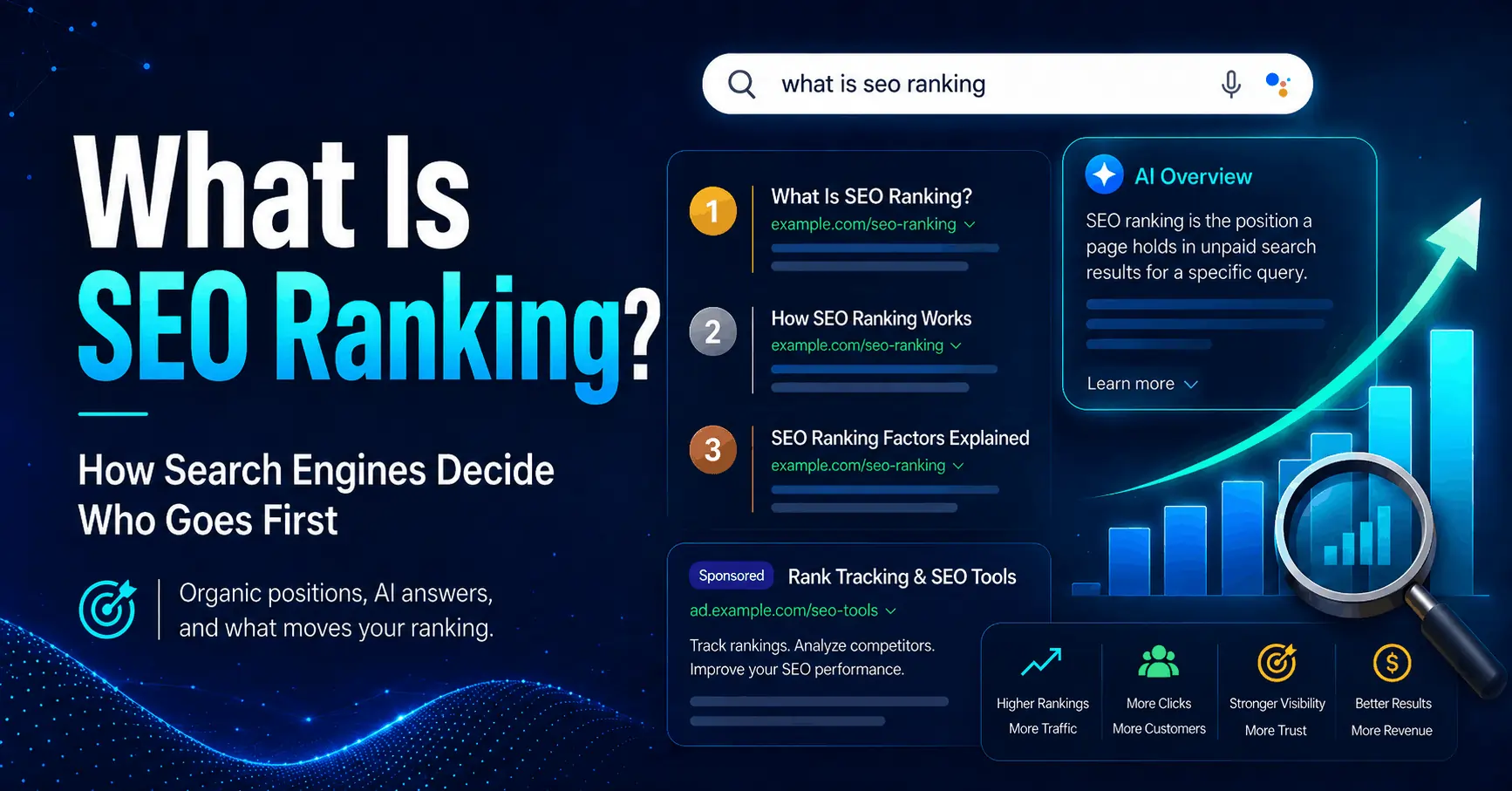
Two articles can cover the same topic, be about the same quality, and still end up worlds apart. One pulls in thousands of visitors a month. The other gets almost none. The usual reason is SEO ranking.
If you run a website, you have probably been told to “improve your rankings” without anyone explaining what the phrase means, how the order gets decided, or whether ranking even matters now that Google answers so many questions with AI before you can click.
This guide fixes that. You will get a plain-English definition of SEO ranking, a clear look at how search engines choose who goes where, the factors that move your position, how to check where you stand, and an honest take on what changed in 2026. No jargon walls. Just a model you can act on.
What Is SEO Ranking?
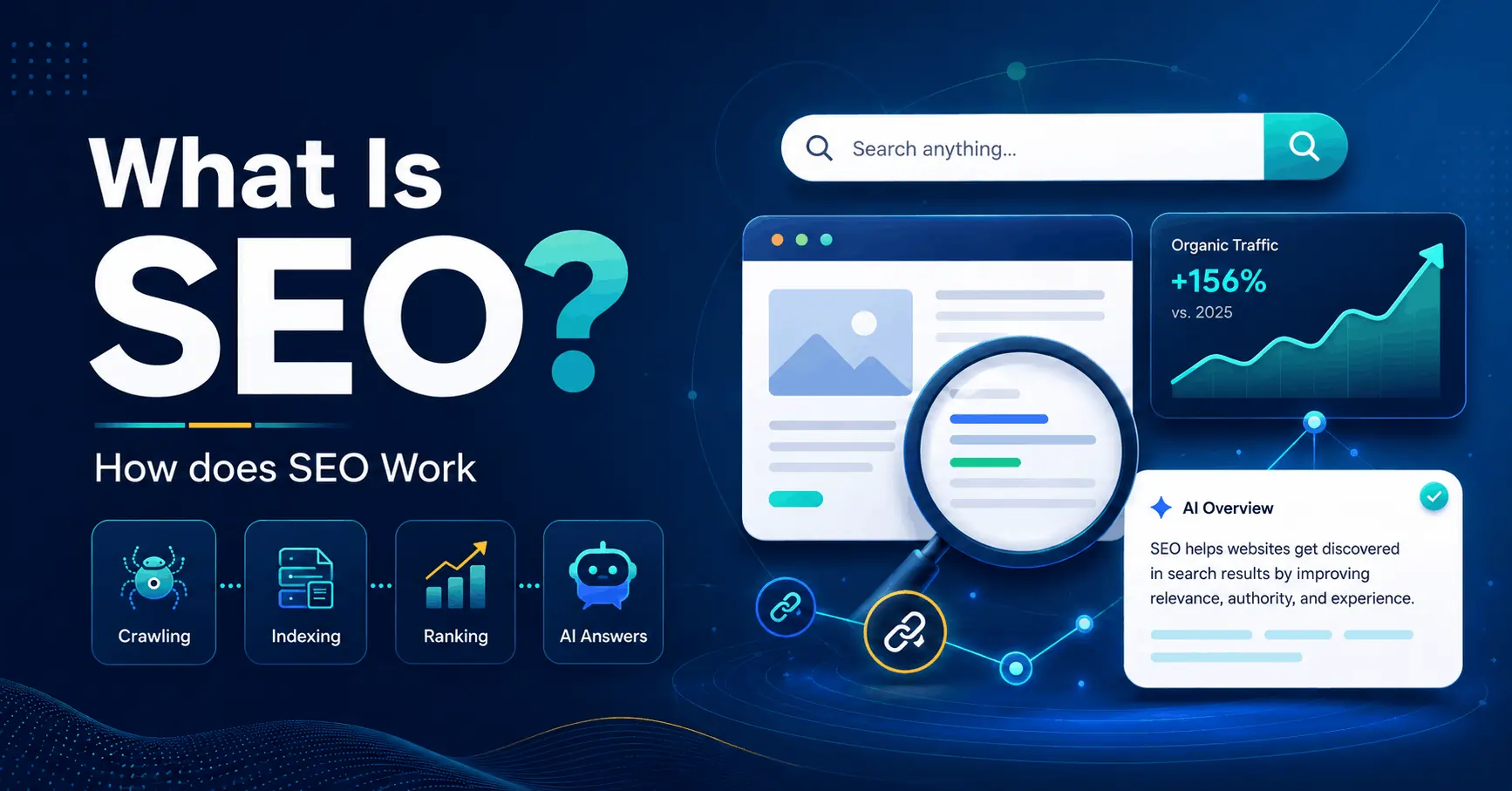
SEO ranking is the position your web page holds in a search engine’s unpaid results for a specific search. Search “best running shoes for flat feet,” and if your article shows up fourth, your ranking for that search is four. Search engine optimization, or SEO, is the work of earning those positions. The ranking is the scoreboard. SEO is how you play.
The results live on a page called the SERP, short for search engine results page. Not every spot on it is earned the same way.
Organic Results vs. Paid Ads
Look closely and you will see two kinds of listings. The ones tagged “Sponsored” or “Ad,” usually at the very top, are paid placements bought through Google Ads. The rest are organic results, the listings Google selects on merit. SEO ranking refers to the organic side. You cannot buy those positions, which is exactly why they are worth having.
Position matters because attention clusters at the top. The first organic result earns a large share of the clicks, and that share falls off steeply as you move down the page. Page two barely exists; the old joke is that it is where you hide things you do not want found.
SEO Ranking vs. SEO Score
Plenty of tools hand your site an “SEO score” out of 100. Useful, but do not confuse it with ranking. A score is a tool’s estimate of how optimized a page looks. A ranking is your real position in the results. A page can score 95 and still sit on page five if it misses search intent or faces stronger competition. Chase the ranking, not the gauge.
You Don’t Have One Ranking. You Have Thousands.
Here is the part most explanations skip, and it changes how you should think about all of this.
You do not have an SEO ranking. You have hundreds or thousands of them.
Your position shifts depending on several things:
- The exact search. A single page can rank first for one phrase, ninth for a close variation, and nowhere for a third. Every keyword is its own race.
- Page, not site. Google ranks individual pages, not whole websites. Your blog post might dominate while your homepage ranks for nothing but your brand name. Same domain, different outcomes.
- The device. Mobile and desktop results differ, and Google primarily judges your site by its mobile version.
- Location. Search “coffee shop” in Davao and in Berlin and you get completely different lists. Local intent reshapes the page.
- Personalization. Your past activity and signed-in history nudge what you see.
- The moment. Results move constantly as Google recrawls pages, competitors publish, and systems update.
So “I rank number one” is a shaky claim on its own. Number one for whom, on what device, in which city, searching which exact words?
The practical takeaway: stop chasing a single trophy position. Track your average position across the searches that bring you customers. That number you can measure, and I will show you where to find it.
How Google Decides What Ranks
Before a page can rank, three things have to happen in order.
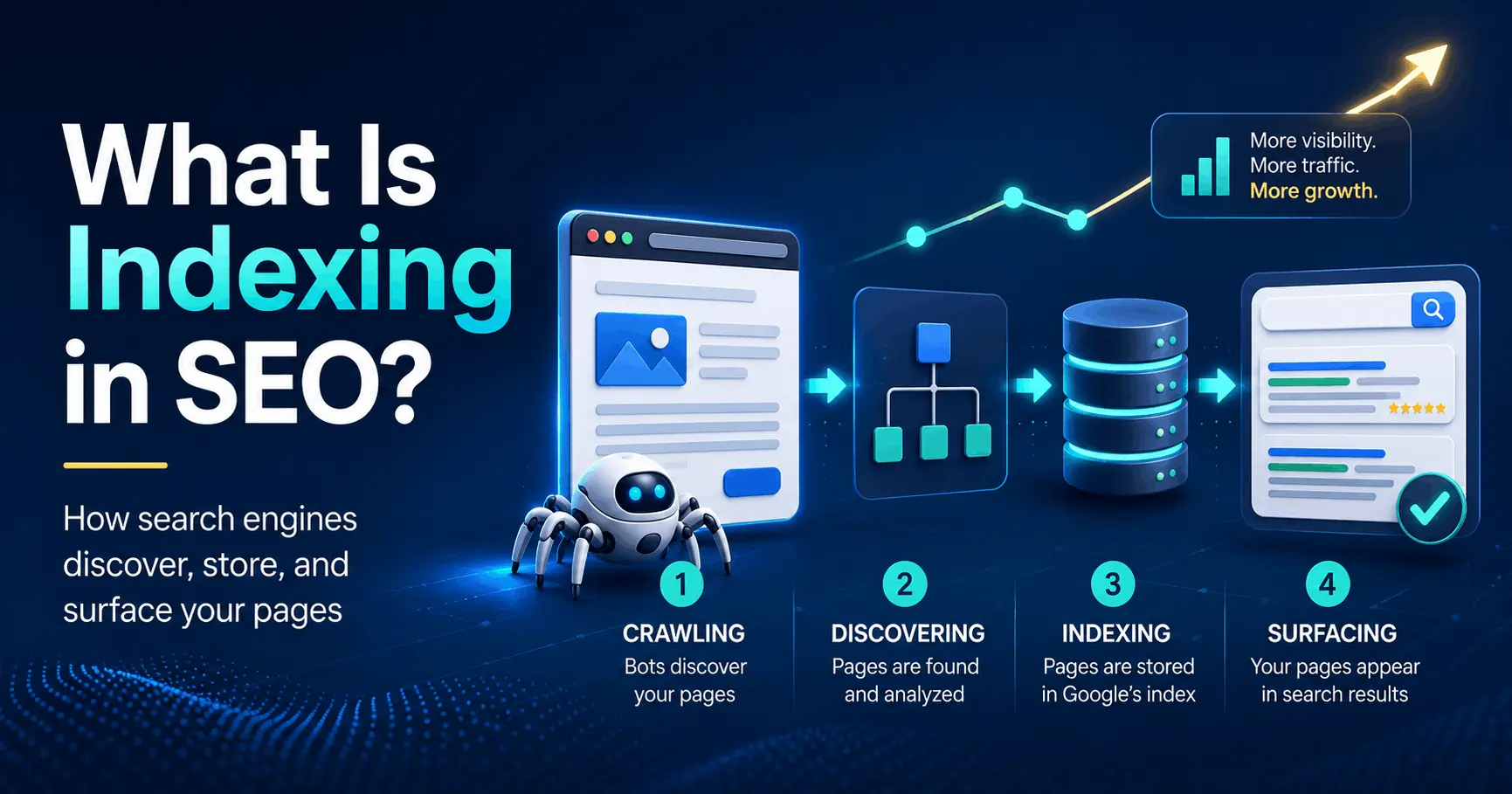
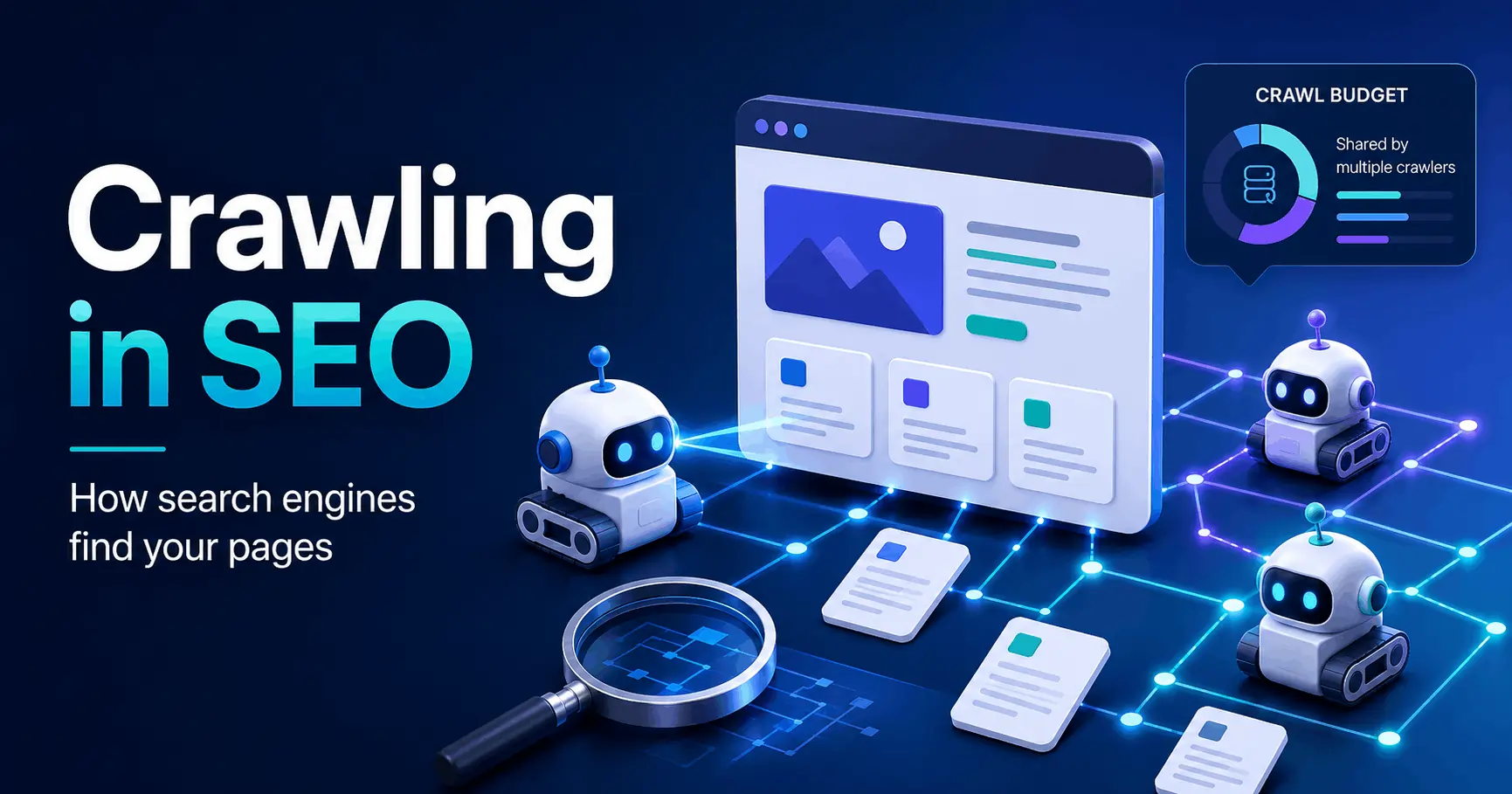
Crawling. Automated programs called crawlers follow links around the web and discover your pages. If nothing links to a page and you have never submitted it, Google may not find it.
Indexing. Google reads what each page is about and files it in a giant database called the index. A page that never gets indexed cannot rank, full stop. Thin, blocked, or duplicate pages often get left out.
Ranking. When someone searches, Google pulls the relevant indexed pages and orders them. That order is your ranking.
The ordering is not a single rule. Google runs a stack of machine-learning systems that try to read what a search means, not just match its words. The lesson for beginners is simple: modern search ranks meaning, not keywords. Typing “cheap flights” five times does nothing. Answering the real question behind “cheap flights” does everything.
What Actually Moves Your Ranking
Google uses many signals and publishes none of the exact weights. Anyone selling you the “complete list” is guessing. The good news is that the factors that matter cluster into a few buckets, and getting them reasonably right is most of the battle.
Relevance and Search Intent
Relevance is whether your page matches what the searcher meant, not just the words they typed. Intent is the stricter version of that. Someone searching “what is SEO ranking” wants to learn. If your page is a sales pitch for an SEO agency, it misses the intent and struggles, however polished it is.
Before you write anything, search your target term and study what already ranks. Google has effectively told you what it thinks searchers want. Match that format, then do it better.
Content Quality and E-E-A-T
Google leans on a concept it calls E-E-A-T: Experience, Expertise, Authoritativeness, and Trustworthiness. It is not a score you can look up. It is the question behind the curtain: should this page be trusted to answer this search?
Quality content tends to:
- answer the question completely, so the reader does not bounce back to Google
- show real, first-hand experience and concrete specifics
- come from a credible source with clear authorship
- stay accurate and current
Depth beats length. A focused 1,200-word page that fully answers the question will outrank a padded 4,000-word one.
Authority and Backlinks
When other reputable sites link to your page, Google reads it as a vote of confidence. The math has shifted, though. A few links from trusted, relevant sites now outweigh hundreds of spammy ones, and low-quality link schemes can actively hurt you. Earn links by making something worth citing, then put it in front of people who might reference it.
Technical Health and Page Experience
If Google cannot crawl, read, and load your page reliably, nothing else matters. The baseline:
- the page is crawlable and indexed
- it loads fast and stays visually stable (Google measures this through Core Web Vitals)
- it works well on phones, since that is the version Google ranks
- it runs on HTTPS
Brilliant content on a site Google cannot access will not rank. A technically perfect site with thin content will not either. The factors work together.
Why Ranking #1 Doesn’t Mean What It Used To
For years the goal was simple: reach the top blue link and collect the clicks. In 2026, the results page itself has changed, and so has the payoff.
Google now places AI Overviews, the AI-generated summaries, at the top of a large share of results. When that summary answers the question, many people get what they came for and never click anything. This is called zero-click search, and it is growing. The effect is sharpest on informational searches, exactly the kind that “what is SEO ranking” belongs to.
So you can hold the top organic spot and still lose a big chunk of the clicks you would have earned a few years ago. That is an uncomfortable fact, and pretending otherwise helps no one.
Here is the more useful framing, and it comes from Google itself. In May 2026, Google published its first official guidance on optimizing for AI search, and the headline was blunt: AI search is still search. The AI features are built on the same ranking and quality systems as regular results, so the work that earns a strong ranking is the same work that gets your page cited inside an AI answer. Google also poured cold water on the cottage industry of “AI optimization” tricks: no special schema, no llms.txt file, no separate playbook. Its actual advice was to write for humans, not for machines.
So ranking still matters enormously. It is the entry ticket. A page that cannot rank in regular search cannot be cited in an AI answer either. The goal has simply widened: earn the position, and structure the page clearly enough that both people and AI systems can pull the answer out of it.
What Counts as a Good SEO Ranking?
A good ranking depends on the search and your goal, but the general targets are clear:
- Positions 1 to 3: the aim for any term that matters to your business. This is where most clicks go.
- Positions 4 to 10: still on page one, still earning traffic, with real room to climb.
- Page two and beyond: treat these as opportunities, not wins. Almost no one looks there.
One caveat worth holding onto: ranking first for a term nobody searches, or one that brings the wrong visitors, is worth less than ranking fifth for a search your actual customers make. Aim high for the queries that attract buyers, not vanity terms.
How to Check Your SEO Ranking
The worst way to check is to Google the term yourself and eyeball it. Personalization and location mean you are seeing your results, not everyone’s. Two tools do the job properly.
Google Search Console (free, and essential). Connect your site, open the Performance report, and you will see the real searches your pages appear for, your average position for each, how often you showed up (impressions), and how often people clicked. If you do one thing after reading this, set it up. Watch for a telling pattern: if impressions rise but clicks fall, something like an AI Overview or a featured snippet is probably sitting above you and absorbing the clicks.
A rank tracker (paid). Tools such as Ahrefs and Semrush track specific keywords over time, across locations and devices, and many now flag which of your terms trigger an AI Overview. They earn their cost once SEO becomes a serious channel, but Search Console is plenty to start.
Whatever you use, watch the trend over weeks, not the position on any single afternoon.
How to Improve Your SEO Ranking
You do not fix every factor at once. Pick one page that matters and work through this.
- Target a search you can realistically win. Going after “shoes” as a new site is hopeless. Going after “waterproof trail running shoes for wide feet” is winnable. These specific, lower-competition terms (often called long-tail keywords) bring qualified visitors and rank far faster.
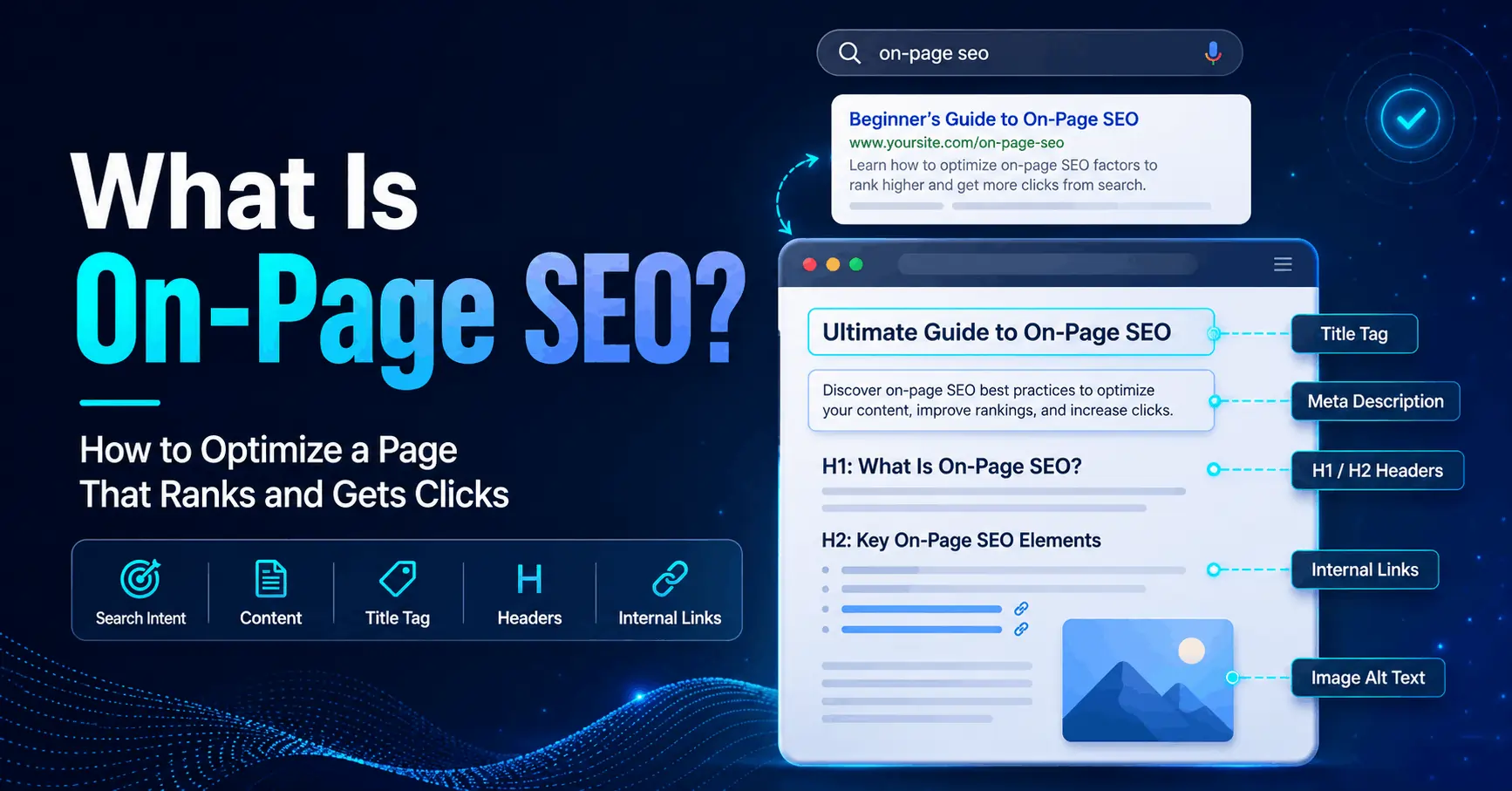
- Match the intent. Search your target term, study the top results, and give searchers the format they clearly expect instead of fighting it.
- Build the best page on the topic. Cover the question completely, answer the obvious follow-ups, and add the example or detail your competitors skipped. Be thorough without padding.
- Fix the technical basics. Confirm the page is indexed, loads fast, and works on mobile. Search Console will tell you what is broken.
- Earn relevant links. Make something worth referencing, then do outreach in your niche. One link from a respected site beats fifty from nowhere.
- Structure for AI answers too. Lead sections with direct answers, use clear question-style headings, and keep facts easy to lift. This is what helps you get cited when an AI Overview shows up.
- Measure and repeat. Track average position and clicks, improve the pages sitting in positions 5 to 15, and keep going. Lifting a page from position 8 to position 3 is usually easier than starting a new one from scratch.
How Long Does It Take to Rank?
Longer than you would like. SEO compounds slowly rather than switching on. A new page on a new site often takes months to gain traction while Google builds trust in your domain. An established site with existing authority can rank fresh content much faster.
Two expectations keep people sane. Rankings bounce around, especially early, so a dip after a good week is normal. And no one can promise a specific position, because the algorithm and your competitors never stop moving. Treat steady improvement as the goal, not a fixed spot.
The Bottom Line
Strip away the jargon and SEO ranking comes down to one idea: Google is trying to give each searcher the best answer it can, and your ranking is its verdict on whether your page is that answer. The sharper truth is that it is not one number but thousands, and in 2026 it sits inside a results page where an AI summary often speaks first. Ranking still matters. It is the ticket that gets your page into the room, and increasingly, into the AI answer.
So stop chasing positions and start serving the person doing the searching. Match what they want, answer it better than anyone else, and make the page easy to reach and easy to trust.
Here is your one next step. Open Google Search Console, find a single query where you sit somewhere in positions 5 to 15, and improve that page this week. One page, one search, one step up. That loop, repeated, is what ranking improvement actually looks like.
Frequently Asked Questions About SEO Ranking
Here are clear answers to the most common SEO ranking questions, from checking your position in Google to understanding how AI is changing search.
How do I check my SEO ranking?
Use Google Search Console to check your SEO ranking for free. After you verify your website, open the Performance report to see which keywords bring up your pages, your average position, impressions, clicks, and click-through rate.
Do not check rankings by Googling your keyword manually. Google changes results based on location, device, search history, and personalization. For a quick one-off keyword check, you can use a free tool like Seobility’s Ranking Checker, but treat it as a snapshot. Use Search Console to track real performance over time.
What does SEO mean?
SEO stands for Search Engine Optimization. It means improving your website so search engines can find, understand, trust, and rank your pages for relevant searches.
In simple terms, SEO helps your pages appear higher in unpaid search results on platforms like Google, Bing, and Yahoo. Stronger visibility brings more visitors to your site and helps potential customers discover your content, products, or services.
Is SEO difficult to learn?
SEO is not difficult to start learning, but you need patience to get good at it. You can learn the basics, such as keywords, search intent, content quality, links, and technical SEO, in a few weeks.
The challenge comes from applying good judgment. SEO results move slowly, rankings can take weeks or months to improve, and search algorithms keep changing. Good SEO does not rely on tricks. It comes from consistently improving your content, technical setup, and authority over time.
What are the top 3 SEO ranking factors?
Google does not publish an official top-three list of ranking factors, but most SEO success comes from three core pillars: helpful content, authority, and technical SEO.
Helpful content matches the searcher’s intent and answers the query better than competing pages. Authority grows when your site earns trust through relevant backlinks, brand credibility, and expertise. Technical SEO helps search engines crawl, index, load, and understand your pages properly, especially on mobile devices.
Search engines use many signals, but these three areas drive most meaningful SEO improvement.
Is SEO being replaced by AI?
No, AI is not replacing SEO. It is changing it.
AI Overviews, answer engines, and generative search have changed how people discover information. Some users now get answers without clicking a website. But AI search still depends on crawlable, trustworthy, high-quality content from the web.
That means you should not focus only on ranking in traditional blue links. You should create clear, useful, well-structured content that can rank in search results and appear in AI-powered search experiences. SEO is not dead. It now includes Answer Engine Optimization and Generative Engine Optimization as part of a broader search visibility strategy.